
three bags of gold: where the stocking story starts
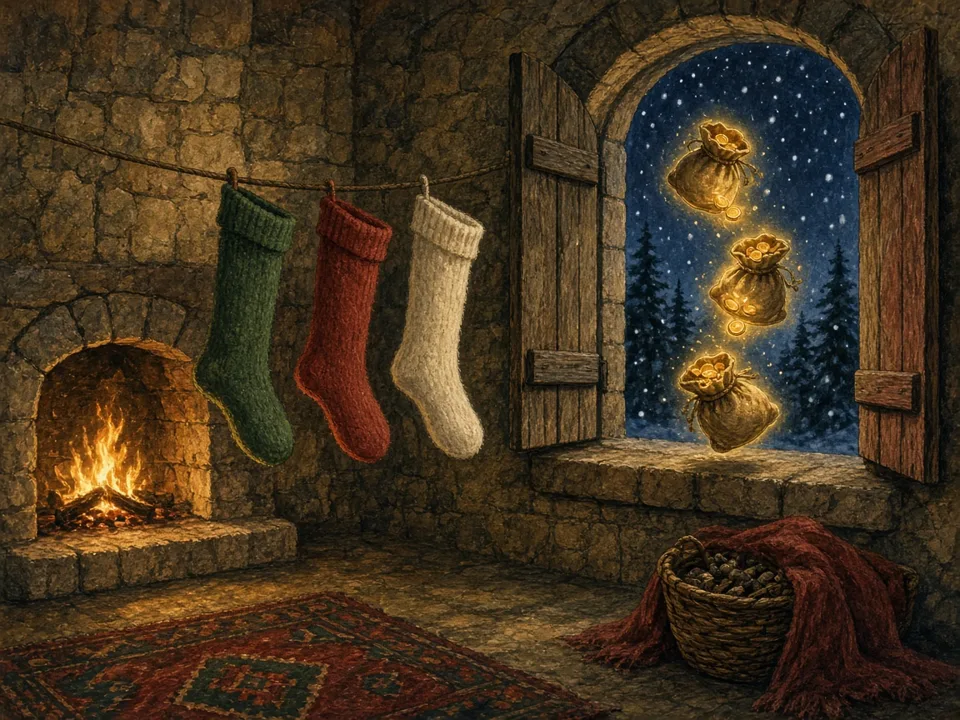
every stocking on every mantel is quoting a story. it's an old one, and nobody can say exactly how old.
the man in the middle
- britannica says nothing certain is known of the life of st. nicholas, except that he was probably bishop of myra, in what is now turkey, in the 4th century.
- his western feast day is december 6, and in many countries children receive gifts on st. nicholas day.
- he was known for generosity. one legend says he gave marriage dowries of gold to three girls whose family had fallen into poverty.
the sock part
the st. nicholas center tells it like this: a man who had once been rich had three daughters and no dowries. nicholas came in secret, by night, and tossed a bag of gold through an open window. it landed in a stocking left before the fire to dry.
two more bags followed, one at a time. on the third night the father kept watch and caught him, and nicholas asked him to keep it secret.
a gift that didn't want a name. a sock that just happened to be there.
versions, versions
- the center notes that in some versions it's a shoe, which is where the european custom of leaving shoes for st. nicholas comes from.
- smithsonian magazine calls the stocking story a tale of unknown origin and date, and still the one most cited for why stockings get hung.
- one variant swaps the coins for three gold balls. some say that's why oranges end up in stockings. others say it's from a time when fresh fruit was harder to come by.
how he crossed the ocean
after the reformation, britannica says devotion to nicholas faded in protestant europe except in holland, where he stayed sinterklaas. dutch colonists brought him to new amsterdam, now new york city, in the 17th century, and english speakers turned the name into santa claus.
sources
- St. Nicholas Center: Three Impoverished Maidens, or The Story of the Dowries
- Encyclopaedia Britannica: St. Nicholas
- Smithsonian Magazine: The Legend of the Christmas Stocking (Dec 14, 2012)
every fact above links to its public source. mentioned for history only. no logos, no affiliation.